Abstract:
Background: War conflicts substantially decrease the person’s psychological state. Russia’s long war against Ukraine has led to the emergence of stress-related consequences both in peaceful citizens and representatives of the helping professions, which require rehabilitation to prevent them from developing into a chronic form.
Aims. The aim of the study was a psychometric comparison of the resource profile of three groups of helping specialists during protracted war (doctors, nurses, psychologists), and identifying their interprofessional level of well-being.
Data collection was under martial law in Ukraine during 2025-2026. The sample included 406 participants, aged 18-42: 136 doctors, 142 nurses, and 128 psychologists, recruited from professional societies, medical institutions, and psychological services with voluntary, written informed consent. Each subgroup included over 120 observations, meeting the requirements for multigroup confirmatory analysis and latent profile modeling. The design and reporting were consistent with STROBE recommendations for observational studies. The study was conducted in accordance with the principles of the Declaration of Helsinki, Code of Ethics of American Psychological Association and was approved by Research Ethics Committee and Review Board of the Department of General and Medical Psychology of Bogomolets National Medical University, protocol No. 7-05 dated October 9, 2025.
Methods: The diagnostic methods included five standardized Ukrainian-adapted instruments that operationalize the salutogenic pole of mental health, resilience and psychological safety. Statistical analysis included the following: missing data handling; psychometric backend; measurement invariance; comparison of latent means; robust comparison at the indicator level, which used the Livigno test – homogeneity of variances and the Box M criterion – homogeneity of covariance matrices; control for multiplicity and common method; moderated mediation in the form of a theoretical model “military exposure → subjective well-being” with mediators “recovery resources/resilience” and “psychological safety”; latent profile analysis; as well as power and Bayesian complement.
Results: The results obtained allowed for three levels of generalizations: psychometric, differential-professional, and configural. Subjective well-being across three groups was positively correlated with positive mental health, adaptation, psychological safety and negatively correlated with stress responses and war exposure; war exposure was positively associated with stress responses and negatively correlated with adaptation. The confirmation of configural and metric invariance and the achievement of partial scalar invariance mean that the constructs used have a common structure and metric in doctors, nurses, and psychologists, and therefore their comparison is meaningful, and not an artifact of different understandings of the items [this result substantiates for the first time the suitability of the salutogenic-psychosocial battery for interprofessional comparisons in the Ukrainian military context and creates a basis for further longitudinal and interventional research].
Conclusion: Each participant group contains both resilient and depleted individuals, but in varied proportions (nurses are the most stressed-knackered, doctors – less, psychologists – the least), so, the targeted psychosocial support should be aimed to identified exhausted groups rather than the profession. The moderated mediation model clarifies the mechanism: war exposure reduces well-being both directly and indirectly – through depletion of recovery resources and weakening of psychological safety, with the protective role of these resources being most pronounced where they are better developed.
Keywords: Russia’s war in Ukraine, helping professions, subjective well-being, resilience, recovery resources
Biography:
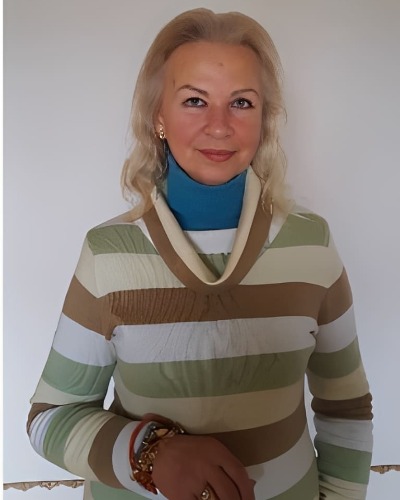
Full Prof. Andreyanna Ivanchenko, PhD in Psychology, title of Doctor of Psychological Sciences, works at Dragomanov National Pedagogical University in Kyiv and at Kharkiv Institute “Interregional Academy of Personnel Management” in Kharkiv (Ukraine). She has over 40 years of teaching Psychology and Foreign languages (Italian, English, Russian), published over 130 article, 52 abstracts at international conferences/congresses. In 2005 she became Reiki Master/Teacher of theoretic-practical self-rehabilitation bases according to ancient-Eastern psychological-philosophical tradition “Usui Reiki Ryoho”, taught by Italian and Japanese Reiki Masters/Teachers. She is a member of Editorial Board of 3 international scientific Journals of the State University of Rio de Janeiro (in Brazil, USA, Ukraine) and a Scientific Committee member of the International Think Tank «Borderland Education Network», based in Italy. Her research interests: Psychology of Creativity as a vital dynamic orientation, Victimology, Crisis-extreme Psychology, psychosomatics, stress-resistance, psycho-bioenergy, coping means, ancient-Oriental self-restoring arts, psycholinguistics, Sport/Political Psychology.
© 2026 Mathews International LLC. All rights reserved.
