Abstract:
Background: Bruton's tyrosine kinase (BTK) inhibitors are an emerging class of oral disease-modifying therapies for relapsing multiple sclerosis. By modulating B-cell signaling and innate immune pathways involved in disease pathogenesis, they represent a novel therapeutic approach. With several randomized trials recently evaluating their efficacy and safety, a comprehensive synthesis of available evidence is warranted.
Objectives: To evaluate the efficacy and safety of BTK inhibitors compared with placebo or active disease-modifying therapies in patients with relapsing multiple sclerosis.
Methods: A systematic review and meta-analysis was conducted according to PRISMA guidelines. PubMed, Scopus, and the Cochrane Library were searched from inception to June 2025. Eight publications reporting four unique randomized controlled trial populations involving 3,757 participants met the inclusion criteria. Three randomized comparator-controlled trial populations were included in quantitative synthesis, while remaining publications were synthesized narratively. Outcomes included annualized relapse rate, magnetic resonance imaging activity, overall adverse events, serious adverse events, treatment-related adverse events, and treatment discontinuation due to adverse events.
Results: BTK inhibitors demonstrated comparable annualized relapse rates with comparator therapies (mean difference = 0.00; 95% confidence interval: −0.01 to 0.02; P = 0.64). Treatment-related adverse events were significantly less frequent with BTK inhibitors (risk ratio = 0.80; 95% confidence interval: 0.69–0.94; P = 0.006). No significant differences were observed in overall adverse events, serious adverse events, or treatment discontinuation due to adverse events. Magnetic resonance imaging outcomes, including gadolinium-enhancing lesions, were synthesized narratively due to differences in reporting methods across studies.
Conclusion: BTK inhibitors demonstrated efficacy comparable to existing disease-modifying therapies while maintaining a favorable safety profile in the studied populations. The lower incidence of treatment-related adverse events may suggest improved tolerability. Larger randomized controlled trials with longer follow-up are required to confirm their long-term efficacy and safety.
Biography:
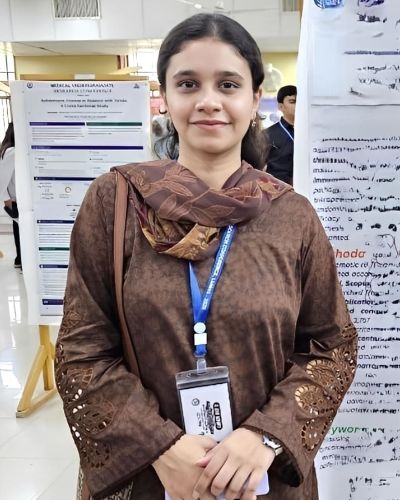
Arhama Shaikh is a final-year medical student with interests in clinical medicine, medical research, and neurology. Her work includes systematic reviews and meta-analyses focused on neurology. She has presented at academic forums, including an oral presentation at the INSPIRE 2026 National Medical Research Symposium and a poster presentation at MURC 2026, with abstract selections at MURC 2025 and MEDCON 2026. She has completed medical education courses from Stanford University School of Medicine, Aga Khan University, and Cleveland Clinic, covering neurology, primary care, clinical decision-making, and resuscitation. She is pursuing opportunities in U.S. neurology training and academic medicine.
© 2026 Mathews International LLC. All rights reserved.
