
Abstract:
Comparative developing brain histo-anatomical pathologies of Fluoride ions and Bifenthrin in-ovo exposures were explored in the golden black variety of domestic chick. Three exposure groups were – the Vehicle control group (Vg); Fluoride (F) group; and the Bifenthrin (Bn) group, each with forty fertilized eggs, which received their respective treatments at day 0 of incubation. Embryos were extracted after 14 days and their whole brains were dissected and preserved in Bouin’s fixative for 24 h for further studies.
Morphologically, brains in the F group were atrophied, while brains in the Bn group appeared hypertrophied compared to Vg. Histologically, both F and Bn exposures caused enlarged third ventricles, optocoeles, arachnoid mater changes, encephalic spongiosis, and decreased neuroglial density. Morphometric data showed a significant decrease (p ≤ 0.05) in mean brain weight and density in F and Bn groups relative to Vg. The F group had significantly lower brain length and width than the Bn and Vg groups, whereas the third ventricle breadth was significantly lower in Bn than in F and Vg. In both F and Bn groups, the optocoele and fourth ventricle breadths were significantly greater than in Vg, while optic lobe wall thickness in F was significantly lower than in Bn and Vg. In addition, neuronal density in the diencephalon, optic lobe, and cerebellum was significantly (p ≤ 0.05) reduced in F and Bn groups compared to Vg.
The results suggest that even low-dose in-ovo exposure to fluoride or bifenthrin induces neuro-developmental abnormalities in chick embryos, indicating a strong developmental neurotoxic potential for both agents.
Biography:
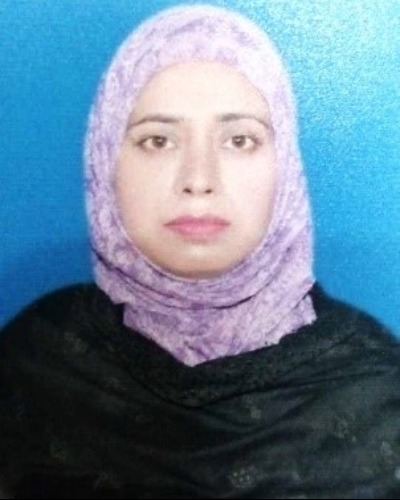
Dr. Syeda Nadia Ahmad is an Assistant Professor and Chairperson of Zoology at the University of Chakwal, Pakistan. She specializes in toxicology, neurobiology, and environmental health, with a research focus on the effects of industrial and environmental toxicants on the central nervous and endocrine systems. Her work explores oxidative stress, developmental abnormalities, and histopathological changes caused by chemical exposure, along with the therapeutic potential of plant-derived bioactive compounds. Dr. Ahmad has authored research articles in reputable journals and supervises undergraduate and postgraduate research. She is committed to advancing scientific understanding and fostering research culture in biological and health sciences.
Copyright 2024 Mathews International LLC All Rights Reserved
