
Title : AI-based seizure detection in the pediatric population: A prisma 2020–guided systematic review
Abstract:
Background: Epilepsy affects over ten million children worldwide. In pediatrics, seizures are often difficult to identify, especially in neonates. Artificial intelligence (AI) provides automated solutions for seizure detection by analyzing EEG and multimodal data.
Objective: This review aims to systematically evaluate studies published from 2020 to 2025 that applied artificial intelligence for pediatric seizure detection, with emphasis on diagnostic performance and methodological quality.
Methods: The review was conducted in accordance with PRISMA 2020 guidelines. Database searches were performed in PubMed and Google Scholar for English-language studies published between January 2020 and June 2025, using search terms including AI, machine learning, deep learning, EEG, and pediatric epilepsy. Inclusion criteria required studies involving patients aged 0–18 years, application of AI models for seizure detection or prediction, and reporting of quantitative performance outcomes. A total of 477 records were identified; 32 duplicates were removed. Following the screening of 445 records and review of 38 full-text articles, 10 studies met the inclusion criteria.
Results: Included studies applied convolutional, recurrent, and hybrid neural networks across EEG, PET, and EHR data. Reported sensitivities ranged from 70% to 98.9%, specificities from 58% to 99.1%, and AUCs from 0.70 to 0.99. Deep learning models consistently outperformed traditional classifiers but lacked external or prospective validation.
Conclusions: AI-based seizure detection in children demonstrates strong technical performance but limited real-world evidence. Standardized datasets, bias assessment, and multicenter validation are required to enable clinical implementation.
Keywords: Artificial intelligence, machine learning, deep learning, pediatric epilepsy, EEG, seizure detection, PRISMA 2020.
Biography:
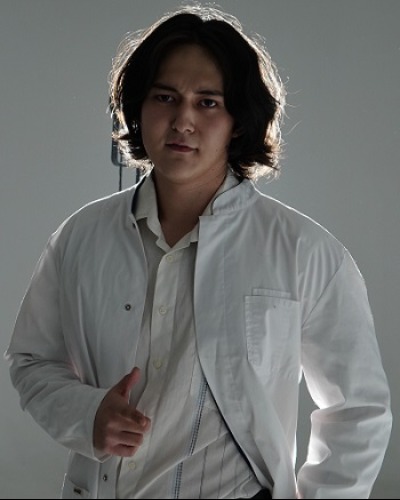
Mer Ask is a 3rd year medical student at Asfendiyarov Kazakh National Medical University (KazNMU) with research interests in neuromodulation, pediatric neurology, and neurodevelopmental disorders. He works in a private clinical setting treating children with neurodegenerative conditions, applying transcranial magnetic stimulation (TMS) in practice. He is actively involved in research on delayed speech and language development and participates in projects related to artificial intelligence training and application in epileptology. His academic interests include neuroplasticity, non-invasive brain stimulation, and the integration of AI technologies into clinical neurology.
Copyright 2024 Mathews International LLC All Rights Reserved
